Exploring the intersection of African medicinal plants, biotechnology and artificial intelligence
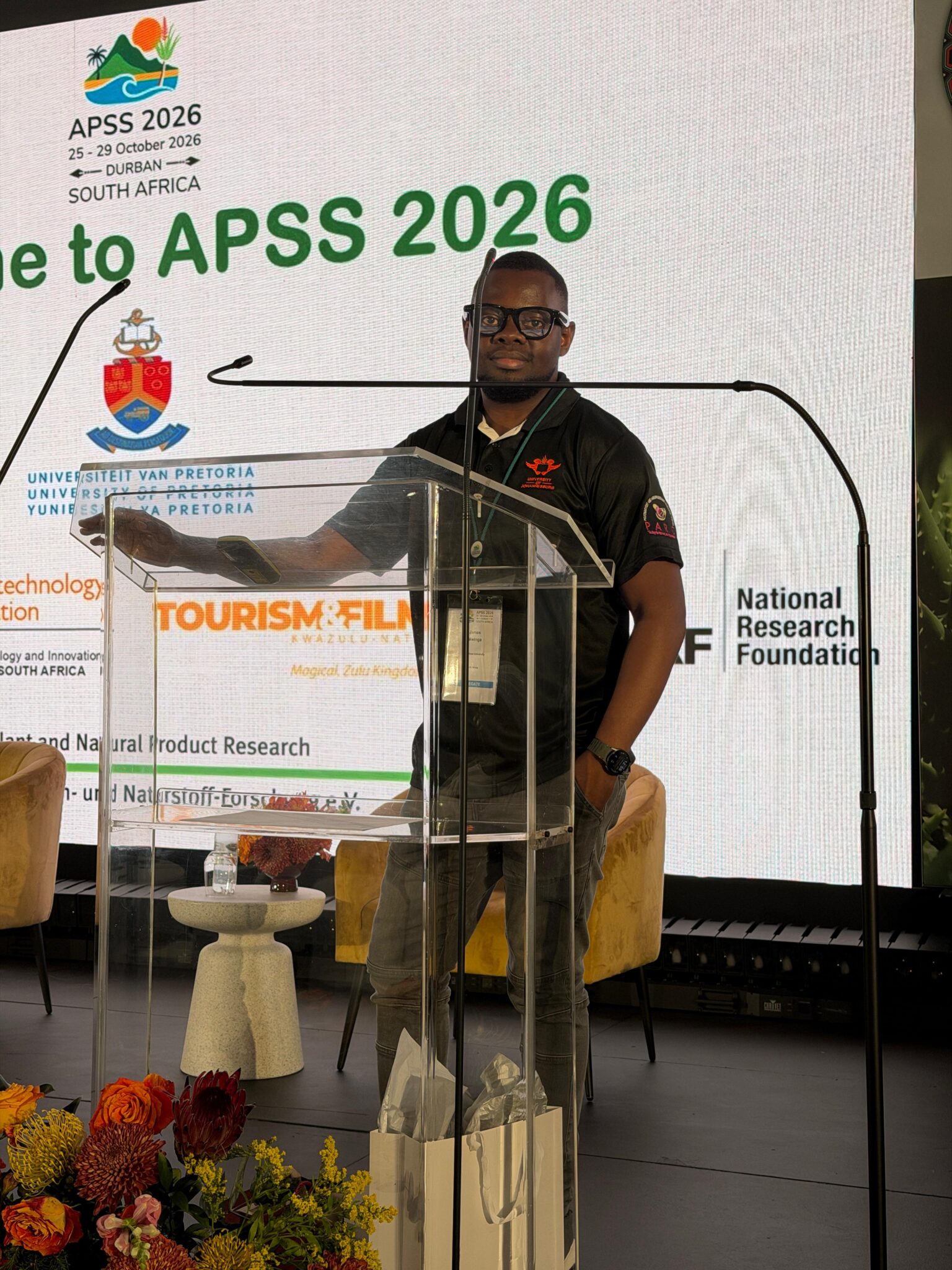
The University of Johannesburg’s Postharvest and Agroprocessing Research Centre (PARC) continues to advance interdisciplinary research that connects Africa’s rich biodiversity with emerging scientific and technological innovations. This was demonstrated at the 3rd International Congress of the African Phytomedicine Scientific Society (APSS 2026), held in Durban, South Africa, from 25–29 October 2026.
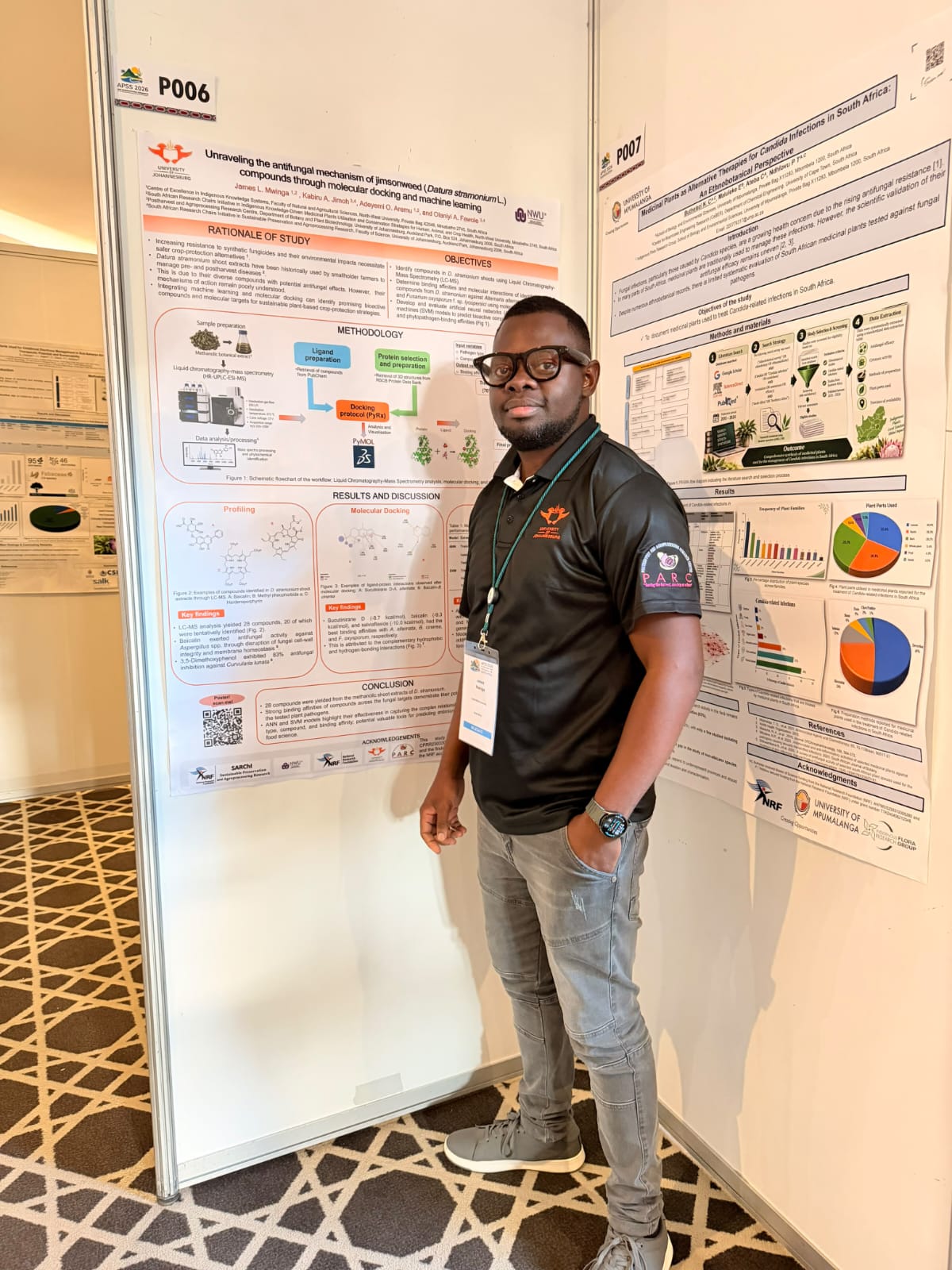
Representing PARC, Dr James Lwambi Mwinga presented research investigating the antifungal mechanisms of compounds derived from jimsonweed (Datura stramonium L.), using molecular docking and machine learning. His work explored how computational approaches can support the investigation of bioactive compounds from African medicinal plants and contribute to a better understanding of their potential applications.
The congress, hosted by the University of Pretoria at The Capital Zimbali Resort, brought together researchers, scientists, traditional health practitioners, indigenous knowledge holders and industry representatives to exchange knowledge on phytomedicine, ethnopharmacology and the development of plant-based products.
Held under the theme “Nature’s Pharmacy: Science, Standards, and Sustainability – Integrating Global Ethnobotanical Knowledge for Modern Healthcare,” the congress provided a platform for discussions on advancing medicinal-plant research through scientific validation, modern biotechnology and sustainable approaches to healthcare innovation.
Connecting Indigenous Knowledge with Scientific Innovation
A key focus emerging from the discussions was the need to strengthen the connection between Africa’s indigenous knowledge and modern scientific research. While the continent possesses extensive medicinal plant resources and traditional knowledge, translating these discoveries into validated products, technologies and commercially viable innovations remains an important challenge.
Achieving this requires more than identifying plants with potential therapeutic properties. It involves rigorous scientific investigation, appropriate validation, ethical research practices, effective regulatory pathways and collaboration between researchers, industry, policymakers and knowledge holders.
The integration of computational tools, including artificial intelligence and machine learning, also presents opportunities to support the investigation of natural compounds and accelerate aspects of scientific discovery. When combined with experimental validation and interdisciplinary expertise, these approaches can contribute to advancing research in phytomedicine and natural-product development.
Advancing Interdisciplinary Research at PARC
Dr Mwinga’s participation reflects PARC’s broader commitment to research that connects biotechnology, computational science, agricultural resources and bio-based innovation. The Centre recognises the potential of African biodiversity as a resource for scientific discovery and the development of sustainable solutions with applications across agriculture, food systems and related industries.
The congress also reinforced the importance of moving beyond academic research towards practical applications that create value, support innovation and contribute to economic development. Responsible commercialisation must remain central to this process, ensuring that indigenous knowledge holders and local communities are recognised and benefit fairly from innovations developed using their knowledge and resources.
PARC congratulates Dr James Lwambi Mwinga on representing the Centre and the University of Johannesburg at this important international scientific gathering.
Through continued research, interdisciplinary collaboration and engagement with the scientific community, PARC remains committed to advancing innovation and translating research into meaningful impact.
Advancing African research, connecting knowledge with innovation and creating possibilities through science.
- Date: 25-29 October 2026
- Location: Zimbali, Durban